The Unspoken Language of the Hand: What Gesture Research Tells Us About How Users Actually Touch Their Devices
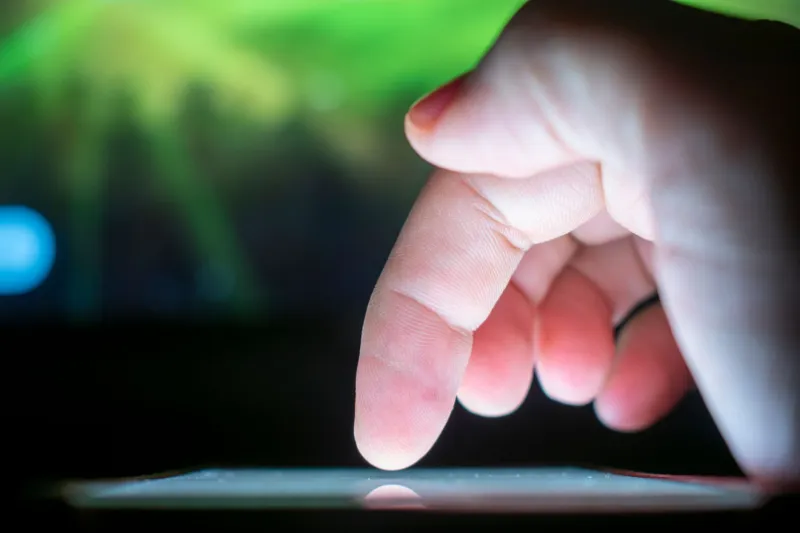
Every time an American commuter unlocks a phone on the subway, scrolls through a news feed at a diner counter, or pinches a map while waiting for a traffic light to change, they are performing a highly structured sequence of physical acts. None of these movements were consciously invented. They were not taught. They emerged — shaped by hand anatomy, social context, device geometry, and years of accumulated tactile habit — into something that HCI researchers have spent the better part of three decades trying to formally describe.
That descriptive project, sprawling and methodologically varied as it is, constitutes one of the more intellectually rich threads in mobile interaction scholarship. And it remains, frustratingly, among the least translated into mainstream design practice.
Cataloguing What the Hand Already Knows
The foundational challenge gesture researchers faced was not technological but taxonomic. Before any system could be designed to accommodate human touch behavior, someone had to observe, categorize, and measure it with precision. Early work in this area drew heavily from cognitive anthropology and ergonomics, treating the hand not merely as an input device but as a socially and anatomically constrained instrument with its own operational logic.
Landmark studies from the 1990s and early 2000s began constructing what researchers sometimes called gesture vocabularies — systematic inventories of the discrete physical movements users employed when interacting with touchscreen prototypes and early stylus-based devices. These catalogues distinguished between gestures that were biomechanically natural (those that aligned with the hand's resting posture and its range of low-effort motion) and those that were merely learnable (those users could be trained to perform but that required deliberate muscular effort or awkward joint positioning).
The distinction proved enormously consequential. A gesture that falls within the natural repertoire of a relaxed hand tends to be executed faster, with fewer errors, and with less conscious attention. One that sits outside that repertoire demands cognitive overhead — which, on a mobile device operating in a fragmented-attention environment, is overhead the user rarely has to spare.
The Thumb Arc and Its Implications
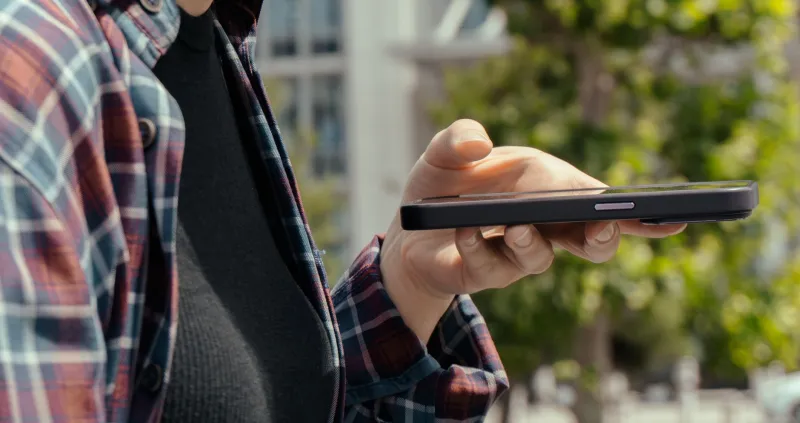
No structure in gesture research has attracted more sustained scholarly attention than the reach envelope of the human thumb. Because single-handed phone operation is so prevalent — particularly in American urban contexts where the other hand is occupied with a coffee cup, a bag strap, or a transit pole — the thumb's biomechanical range effectively defines the usable territory of a mobile interface for a substantial portion of real-world interactions.
Researchers mapping thumb reach across different hand sizes and device dimensions consistently found that the lower-center portion of a screen is the most reliably accessible zone, while upper corners represent the highest-effort targets. These findings are not subtle. The differential in reach comfort between an icon placed at the bottom-center of a display and one placed at the upper-right corner can translate into measurable differences in task completion time, error rate, and reported fatigue during extended use.
What makes this research particularly instructive is its demographic granularity. Studies that disaggregated data by hand size, age, and laterality revealed that the standard design assumption — a kind of averaged, unspecified user hand — systematically disadvantages users with smaller hands, older users whose joint flexibility has diminished, and left-handed users whose dominant thumb traces a mirror-image arc that standard layouts do not accommodate. The field has documented these disparities with rigor. The design industry has, for the most part, declined to act on them.
Social Context as a Gestural Variable
Gesture research has also illuminated something less anatomical and more situational: the degree to which social environment governs how people physically interact with their devices. Studies employing observational methods in naturalistic settings — coffee shops, transit stations, office lobbies — have documented consistent patterns in the adoption of one-handed versus two-handed interaction modes.
Two-handed use, which enables more complex gesture vocabularies including symmetric pinch-to-zoom and multi-finger swipes, tends to appear in contexts of relative privacy and physical stability. Users seated at a desk, relaxing at home, or in low-social-visibility situations are significantly more likely to employ both hands and the fuller range of available gestures. In public or semi-public contexts, where device screens may be visible to others and one hand is often physically unavailable, users default to constrained, single-thumb operation — even when the task at hand would be more efficiently accomplished with two hands.
This context-sensitivity has profound implications for interface architecture. An application designed around the assumption of two-handed engagement — one that places critical controls in zones only reachable with a second hand, or that relies on complex multi-finger gestures as primary navigation mechanisms — is implicitly an application designed for private, stationary use. For the American user checking a banking app on a lunch break or navigating a transit map mid-commute, that application is not merely inconvenient. It is, in any functional sense, broken.
The Grammar Nobody Taught
Perhaps the most theoretically ambitious contribution of gesture research has been its argument that touch interaction possesses something analogous to grammatical structure. Just as natural language has rules governing which word combinations are syntactically permissible, touch interaction has implicit rules about which gesture sequences feel coherent and which feel dissonant.
Researchers have identified what might be called gesture co-occurrence patterns — combinations of movements that users perform fluidly and in sequence, as though they belong together — and contrasted them with gesture sequences that, even when individually familiar, feel cognitively jarring when combined. The scroll-then-tap sequence, for instance, has a naturalness that the pinch-then-swipe-then-double-tap sequence lacks, not because any of the individual gestures is difficult, but because their combination violates something like a grammatical expectation about how touch interactions should flow.
This grammar is not universal. Cross-cultural and cross-demographic studies have documented meaningful variation in which gesture sequences feel natural to different user populations. Age cohort differences are particularly pronounced: users who adopted touchscreen devices later in life often internalized different gestural grammars than those who grew up with them, with practical consequences for how intuitively they navigate gesture-dependent interfaces.
From Scholarship to Practice
The accumulated findings of gesture research present a challenge that is less intellectual than institutional. The scholarship exists. The taxonomies have been built, the biomechanical maps drawn, the social contextual variables documented. What has not happened, with anything like the consistency the research warrants, is systematic integration of these findings into the design processes of the organizations building the applications that hundreds of millions of Americans use daily.
The reasons for this gap are familiar to anyone who studies the relationship between HCI research and commercial practice: publication timelines, organizational incentives, the difficulty of translating probabilistic findings into deterministic design rules. None of these explanations are satisfying, and none of them diminish the cost paid by users whose devices demand gestures their hands were never designed to perform comfortably.
Gesture research has given the field a detailed, empirically grounded account of how human hands actually move through the world of mobile interaction. The next obligation is to let that account do the work it was always meant to do.