The Hand the Industry Forgot: Ergonomic Blind Spots in Modern Smartphone Design

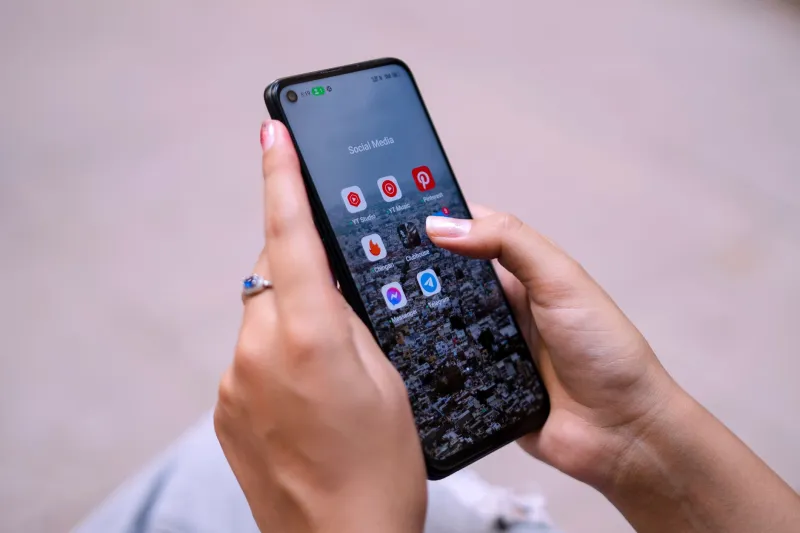
There is a particular frustration familiar to anyone who has attempted to reach the top-left corner of a contemporary smartphone with one hand. The thumb extends, the grip loosens, and for a brief, precarious moment, the device teeters. This is not a minor inconvenience. According to a substantial body of mobile HCI research, it is the outward symptom of a design philosophy that has quietly excluded millions of users from full, comfortable participation in mobile computing.
As screen dimensions have grown — driven by market research suggesting consumers want more visual real estate — the ergonomic relationship between device and hand has deteriorated in ways that academic researchers began documenting years before the mainstream technology press took notice.
Mapping the Thumb's Territory
The foundational work in this area concerns what researchers term the "thumb arc" or "natural reachability zone" — the area of a touchscreen surface that a user's thumb can access without repositioning the hand or adjusting grip. Studies conducted within the mobile HCI research community have produced detailed topographies of this zone, and the findings are consistent: comfortable one-handed operation for most users extends to roughly the lower two-thirds of a display, with the precise boundary varying according to hand size, thumb length, and grip style.
What those same studies reveal is equally consistent: flagship smartphones released by major manufacturers over the past several years have screens that routinely push critical interface elements — navigation controls, notification panels, frequently accessed menus — into regions that fall outside the natural thumb arc for a significant percentage of users.
The phrase "significant percentage" deserves unpacking. Researchers have found that women in the US, who on average have smaller hands than men, encounter reachability deficits on current large-format devices at disproportionately high rates. Older adults, whose grip strength and thumb flexibility may be reduced, face compounding difficulties. When HCI researchers speak of designing for an "average" hand, they are often describing a construct that corresponds most closely to a young adult male — a demographic that, while commercially prominent, does not represent the breadth of people who own and depend on mobile devices.
The Mythology of the Average User
The concept of the average user has a long and complicated history in design. Borrowed partly from industrial ergonomics and partly from early software usability research, it offered a useful simplification during periods when computational resources and design budgets were constrained. Designing for the mean made practical sense when customization was prohibitively expensive.
That justification has largely evaporated. Modern mobile operating systems are capable of remarkable runtime adaptability. Processors that once struggled to render a webpage now handle real-time image processing and machine learning inference. The technical barriers to responsive, anatomically aware interface design are lower than they have ever been — and yet the industry's attachment to fixed-layout UI paradigms persists with remarkable tenacity.
Mobile HCI researchers have proposed several frameworks for addressing this gap. Adaptive UI standards, in which interface element placement adjusts dynamically based on inferred or user-specified hand dominance and size, have been demonstrated in prototype systems and validated in controlled studies. One-handed mode features, now offered in limited form by some Android manufacturers and Apple, represent a partial acknowledgment of the problem — but researchers have noted these implementations are frequently buried in accessibility settings, opt-in rather than default, and rarely extend to third-party applications.
Dead Zones and Their Consequences
The term "dead zone" in mobile ergonomics refers to screen regions that are theoretically interactive but practically inaccessible during normal one-handed use. Research has catalogued where these zones appear on contemporary devices and what happens when developers place functional elements within them.
The consequences are not merely inconvenient. In contexts where users are mobile — walking, commuting on public transit, carrying groceries — the requirement to use two hands or to readjust grip introduces moments of reduced attention and physical instability. Studies examining mobile phone use in pedestrian environments have linked awkward device handling to distraction-related safety incidents. The ergonomic deficit, in other words, carries costs that extend beyond user satisfaction metrics.
For older adults managing chronic conditions who rely on health and medication management applications, dead zones can create genuine barriers to consistent app engagement. For users with upper-limb mobility differences, the problem is more acute still. The research community has been clear on this point: what presents as a minor inconvenience for one population can represent a functional exclusion for another.
What Industry Adoption Would Require
Researchers who have spent careers studying mobile ergonomics tend toward a specific set of recommendations when asked what meaningful progress would look like. The first concerns design guidelines: major platform holders — Apple, Google, and the ecosystem of developers who publish through their app stores — should establish and enforce ergonomic reachability standards as part of their human interface guidelines. Currently, such guidance exists in fragmentary and non-binding form.
The second recommendation involves measurement. Usability testing protocols for mobile applications rarely include systematic evaluation of one-handed reachability across a representative range of hand sizes. Incorporating such evaluation as a standard phase of mobile app development would surface problems that currently reach consumers undetected.
The third, and perhaps most consequential, recommendation is cultural. The mobile HCI research community has produced the tools, the empirical data, and the design frameworks necessary to build more ergonomically inclusive devices and applications. What has lagged is the industry's willingness to treat ergonomic equity as a design priority rather than an edge-case accommodation.
A Record Worth Revisiting
Looking back across the arc of mobile HCI research, the documentation of thumb reachability and hand-size variability represents one of the field's more thorough and actionable contributions. The studies exist. The frameworks have been validated. The populations most affected have been identified with specificity.
The gap between what research has established and what ships in consumer devices is not a knowledge problem. It is a prioritization problem — and closing it will require the research community to continue pressing its findings into spaces where product decisions are made, while industry partners accept that designing for a mythical average hand is no longer a defensible position in an era of sophisticated, adaptable mobile technology.