Inherited Heuristics, Outdated Hardware: Why the Reachability Consensus in Mobile UI Research Needs a Fundamental Rethink
For nearly a decade, a single diagram of thumb arc coverage defined how practitioners approached one-handed mobile interaction. As smartphone screens have grown well past six inches diagonal, researchers and designers are confronting an uncomfortable question: were those foundational assumptions ever as universal as the field believed them to be?
The Research That Shaped a Generation of Mobile Design
When Steven Hoober's observational studies of in-the-wild smartphone use circulated through the design and HCI communities in the early 2010s, they arrived at a moment of genuine uncertainty. Capacitive touchscreens were still relatively new, and practitioners had little empirical grounding for where to place interactive elements on a glass surface. Hoober's findings — that a majority of observed users held their devices in one hand and navigated primarily with the thumb of that same hand — gave the field a concrete, visualizable framework. The resulting "thumb zone" diagram, demarcating comfortable, stretching, and difficult regions of screen real estate, became as close to gospel as mobile HCI produces.
The influence was warranted, at least contextually. The iPhone 4 measured 3.5 inches diagonally. The Galaxy S II, released around the same period, reached 4.3 inches. In that hardware environment, the thumb zone model described a plausible physical reality for a meaningful proportion of users. Designers who internalized the framework were making genuinely evidence-informed decisions.
The problem is that the hardware environment no longer resembles the one in which that evidence was gathered.
When Screens Outgrow the Research
The contemporary American smartphone market is dominated by devices that would have been classified as tablets a decade ago. Apple's iPhone 15 Pro Max ships with a 6.7-inch display. Samsung's Galaxy S24 Ultra reaches 6.8 inches. Even so-called standard models — the baseline iPhone 15, for instance — measure 6.1 inches, a figure that exceeds the largest devices available when foundational thumb zone research was conducted.
This is not a marginal shift. It represents a categorical change in the physical object users are asked to manipulate with a single hand. And yet, a substantial portion of mobile UI guidance — including pattern libraries, platform documentation, and design curricula — continues to reference reachability heuristics derived from research conducted on hardware that no longer exists in the consumer market.
The question HCI researchers are now pressing is whether the behavioral patterns Hoober and contemporaries observed were intrinsic to human hand anatomy, or whether they were artifacts of a specific hardware generation. Preliminary evidence suggests the answer is considerably more complicated than inherited frameworks acknowledge.
Grip Behavior Is Not Static
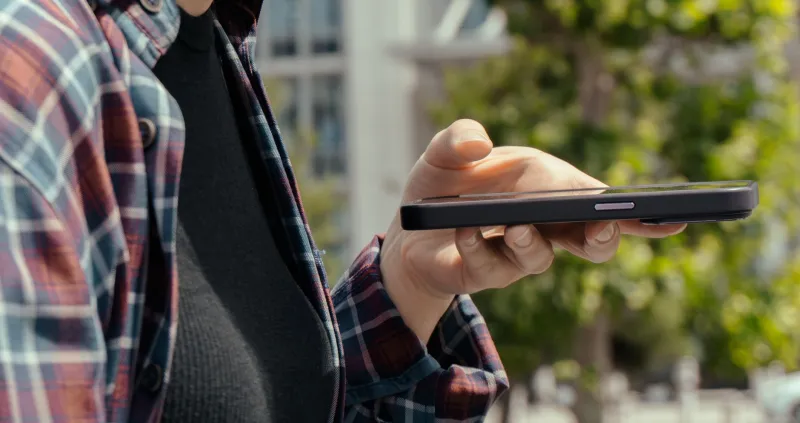
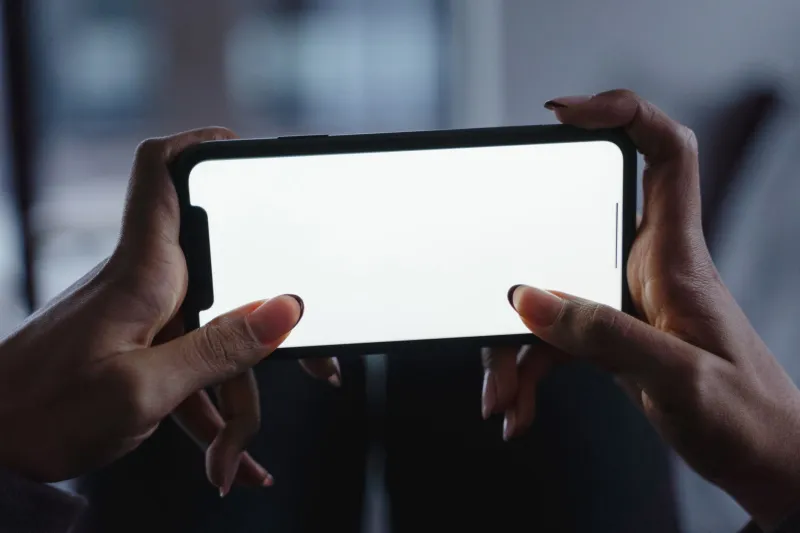
Recent observational and laboratory studies have begun documenting how users adapt their grip strategies as device size increases — and the adaptations are neither uniform nor predictable. Some users migrate toward two-handed operation, using the non-dominant hand to stabilize the device while the dominant thumb navigates. Others adopt what researchers have termed "repositioning grips," periodically shifting the device within a single hand to bring distant screen regions within thumb range. A third cohort simply tolerates reduced comfort, reaching into nominally difficult zones with regularity when task demands require it.
This behavioral heterogeneity poses a fundamental challenge to any unified reachability model. The original thumb zone framework was powerful precisely because it offered a single, generalizable map. Emerging research suggests that map may need to become a family of maps, differentiated by device size, user hand anthropometry, task context, and even social environment. A user reading a long-form article on a crowded subway car in Chicago holds their phone differently than the same user composing a text message while seated at a desk in a suburban office.
The HCI research community has long recognized context as a critical variable in mobile interaction — the concept of "situated use" has substantial scholarly lineage. What is newer is the recognition that grip behavior itself must be treated as a contextual variable rather than a stable input.
Anthropometry and the Representation Problem
Any serious reconsideration of reachability research must also confront a persistent limitation in the underlying data: the populations from which observational findings were drawn were not representative of the full range of human hand morphology present in the American user base.
Hand span, thumb length, and the ratio between palm width and device width vary substantially across sex, age, and ethnic background. A 6.7-inch device held in the hand of a user with a 7.5-inch hand span presents a fundamentally different reachability geometry than the same device held by a user with a 6.2-inch span. Interaction models that do not account for this variance are not merely imprecise — they are systematically excluding portions of the population from the design conversation.
Researchers at several North American institutions have begun publishing anthropometric datasets specifically oriented toward mobile interaction design, and the field would benefit from treating these as foundational inputs rather than supplementary considerations. Accessibility and inclusive design frameworks have long argued for this kind of population-level thinking; the reachability literature is overdue for a similar methodological integration.
What Updated Frameworks Might Look Like
Several research groups have proposed conceptual alternatives to the static thumb zone model. One promising direction involves dynamic reachability mapping — interaction models that adapt interface element placement based on inferred grip state, derived from sensor data including accelerometer readings, touch contact point analysis, and device orientation. Rather than designing for a fixed comfortable zone, this approach treats reachability as a real-time variable that the interface can respond to.
Another direction draws on two-handed interaction research that has historically been underrepresented in mobile HCI literature relative to its prevalence in actual use. If a substantial proportion of users operating large-screen devices are already using two hands, designing exclusively for one-handed thumb navigation may be optimizing for a minority use case — an ironic inversion of the original framework's intent.
Platform-level responses, such as Apple's Reachability feature (activated by swiping down on the home indicator) and various Android one-handed mode implementations, represent engineering acknowledgments that the problem exists. But these remain opt-in accommodations rather than systematic design solutions, and their adoption rates suggest users find them either insufficient or insufficiently discoverable.
A Call for Empirical Renewal
The MobileHCI research community has a responsibility here that extends beyond critique. Identifying the limitations of an existing framework is necessary but insufficient; what the field requires is a coordinated program of empirical renewal — large-scale observational studies conducted on current hardware, with demographically representative samples, across a range of naturalistic use contexts.
Such studies are methodologically demanding and resource-intensive. They are also, given the scale of the mobile interface design industry and the number of users affected by the decisions that industry makes, clearly warranted.
The thumb zone was never a lie, exactly. It was an accurate description of a particular behavioral reality observed in a particular hardware and demographic context. The error was in treating a time-bound empirical finding as a durable universal principle. That error is correctable — but only if researchers and practitioners are willing to question the heuristics they have inherited and invest in generating the evidence that current conditions actually demand.