Scroll Until It Hurts: The Biomechanical Blind Spot at the Heart of One-Handed Mobile Interaction

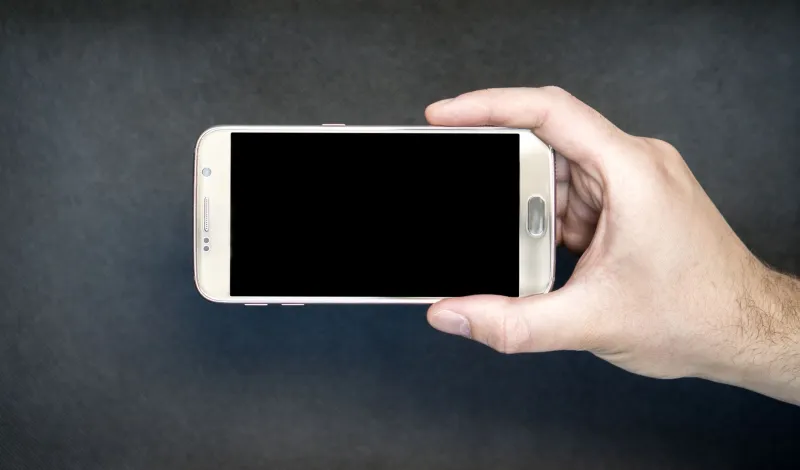
Photo: Japanexperterna.se, CC BY-SA 2.0, via Wikimedia Commons
The Zone Model and Its Comfortable Omissions
For much of the past two decades, mobile interface research has returned repeatedly to a single organizing metaphor: the reachability zone. Diagrams dividing smartphone screens into regions of comfortable, stretching, and difficult access have appeared in conference proceedings, design guidelines, and product documentation with remarkable consistency. The model is intuitive, visually communicable, and, in important respects, incomplete.
What the zone model captures is a static snapshot—thumb extended, device held, screen touched once. What it does not capture is time. It does not account for the cumulative physiological cost of performing that gesture hundreds of times in sequence, under varying postural conditions, across the fractured attention windows that define how Americans actually use their phones: standing on a subway platform, balancing a lunch tray, waiting at a pharmacy counter. The reachability zone tells us where the thumb can go. It says comparatively little about what happens to the thumb when it has been going there for several continuous minutes.
Fatigue as a Research Variable
The biomechanics literature outside of HCI has long documented the relationship between repetitive digit motion and performance degradation. Studies in occupational therapy and sports medicine have established that fine motor precision in the thumb declines measurably under conditions of sustained exertion, with effects accelerating when the wrist is held in non-neutral positions—precisely the posture adopted when gripping a modern large-format smartphone with one hand.
Within mobile HCI specifically, fatigue has appeared as a variable primarily in studies of text entry, where error rate increases over session duration have been used as proxies for cognitive and motor load. Scrolling, by contrast, has been treated largely as a solved interaction. The gesture is simple: a flick or sustained drag along the vertical axis. Its simplicity has perhaps discouraged scrutiny. Yet simplicity of form does not imply simplicity of biomechanical consequence, particularly when that form is repeated continuously across an extended content consumption session.
Gesture recognition research offers some indirect evidence of the problem. Studies examining swipe trajectory accuracy have found that gesture paths become less linear and more variable as session duration increases, a pattern consistent with progressive fatigue in the thenar and hypothenar muscle groups that govern thumb movement. Users compensate by shifting grip, repositioning the device, or switching to two-handed operation—adaptations that the designed interaction model neither anticipates nor accommodates gracefully.
The Transit Scenario as a Test Case
Consider the conditions under which a significant portion of American urban commuters interact with their phones. Standing in a moving train or bus, the user's non-dominant hand is occupied with a support rail or strap. The phone is held in the dominant hand, often without wrist support. The user may be reading a long-form article, scrolling through a social feed, or navigating a news application. The scrolling gesture is not incidental to this activity—it is the primary mode of content progression, repeated continuously for intervals that can extend to twenty or thirty minutes.
Under these conditions, the static zone model offers limited predictive value. The relevant questions are not simply where on the screen the thumb can comfortably reach at the outset of the session, but how that comfort envelope contracts as fatigue accumulates, how grip stability changes as the train decelerates, and what error patterns emerge when precision demands intersect with reduced motor control. These are empirically tractable questions. They have not received systematic attention proportionate to their practical significance.
Precision Degradation and Interface Consequences
The interface implications of fatigue-driven precision degradation are not trivial. Tap targets that are adequately sized for a rested, seated user may fall below effective threshold for a fatigued, standing user. Scroll velocity calibration that feels appropriate at the beginning of a session may produce overshooting errors as motor control becomes less precise. Interaction patterns that require fine positional discrimination—selecting a specific item in a densely populated list, for instance—become meaningfully more error-prone as the session extends.
These are not edge cases. They describe the conditions under which a large proportion of mobile content consumption occurs in American daily life. The design community has responded to static reachability concerns with interface adaptations including bottom-anchored navigation, one-handed keyboard modes, and gesture shortcuts. The analogous response to dynamic fatigue degradation—adaptive interface behavior that responds to session duration, detected grip changes, or inferred postural context—remains largely theoretical.
What a Biomechanically Informed Research Agenda Would Require
Addressing this gap would require methodological commitments that differ from those characteristic of laboratory usability studies. Controlled lab environments, which have generated the majority of gesture interaction data in the mobile HCI literature, are poorly suited to capturing fatigue effects that develop over extended real-world sessions. Ecological validity demands longitudinal observation under naturalistic conditions, instrumented to capture both behavioral outputs—gesture trajectories, error rates, interaction pauses—and, where feasible, physiological indicators of motor fatigue.
Sensor-based methods offer partial solutions. Accelerometer data can detect grip shifts and device reorientation. Touch digitizer data can reveal changes in contact area and pressure distribution consistent with altered thumb posture. These signals are available on contemporary devices and have been applied productively in other domains of mobile sensing research. Their application to the specific problem of scrolling fatigue remains an underexplored opportunity.
Toward an Interaction Model That Acknowledges the Body Over Time
The broader theoretical point is one of temporal scope. Mobile HCI has largely theorized the user as a person performing a discrete interaction at a moment in time. The zone model is an expression of this temporally bounded perspective. A biomechanically complete account of one-handed scrolling requires theorizing the user as a body engaged in sustained physical activity, subject to the same fatigue dynamics that govern any repetitive motor task.
This is not a radical proposition. It is, rather, an application to mobile interaction of principles that are well established in adjacent fields. The gap between what those fields know and what mobile interface design currently reflects is the gap this research community is positioned to close. The thumb's empire is larger than the reachability diagram suggests, and considerably more complicated.