The Mode Nobody Measured: How Mobile HCI Missed the Fluid Reality of Single-to-Two-Handed Transitions
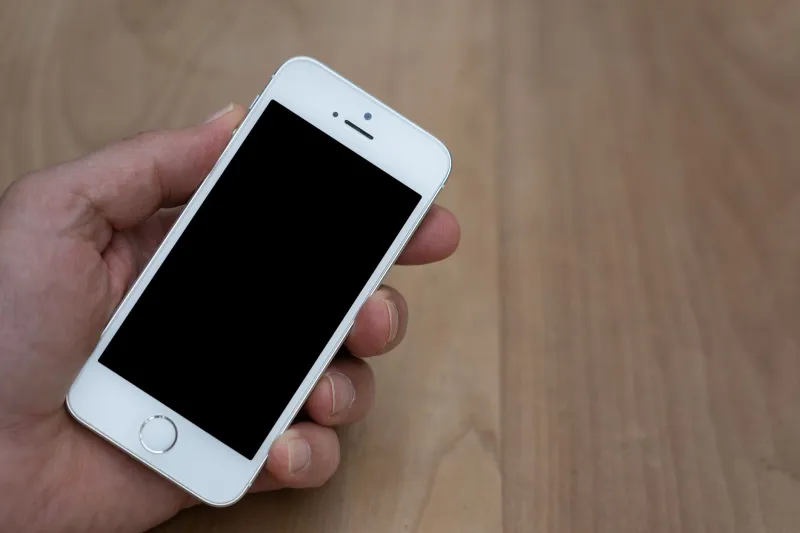
For roughly twenty years, mobile HCI researchers have approached the question of one-handed phone use with genuine rigor. Studies have mapped the reachable zones of the thumb across screen sizes, quantified error rates along the upper corners of tall displays, and produced the now-familiar heat maps that show where users can and cannot comfortably tap while holding a device in a single hand. That body of work is real, reproducible, and consequential. It has directly informed design guidelines at major platform vendors and shaped the ergonomic language of mobile interface standards.
And yet it contains a foundational blind spot so obvious that, in retrospect, it is difficult to explain why it persisted for so long.
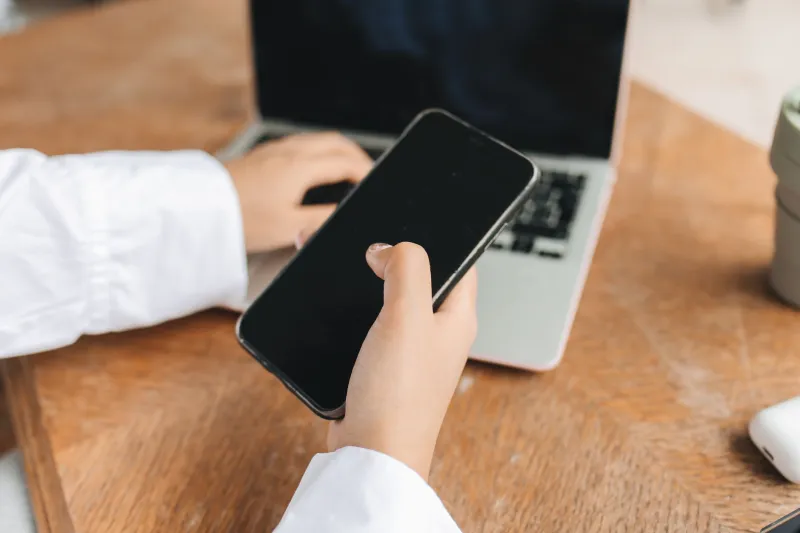
The research has treated one-handed use as a condition—a mode users enter and remain within for the duration of an observed task. What it has rarely asked is what happens in the seconds and minutes surrounding that mode: when users shift a device from one hand to two, or back again, mid-session. Not between sessions. Not between apps. Mid-sentence. Mid-scroll. Mid-thought.
A Binary That Never Existed in Practice
The field inherited a convenient simplification early on. Studies designed to measure thumb reach, grip stability, or error frequency needed controlled conditions, which meant asking participants to complete tasks while holding the phone in a specified grip. That methodological necessity gradually calcified into a conceptual assumption: that one-handed and two-handed use are meaningfully separate interaction states, each with its own coherent set of design implications.
Interaction logs tell a different story. Longitudinal data collected across naturalistic usage sessions—where participants carried instrumented devices through ordinary American daily life, commuting on the subway in Chicago, waiting in line at a coffee shop, walking across a parking lot—consistently show rapid, unsignaled transitions between grip configurations. Users do not announce to their phones that they are about to use both hands. They simply do it, often in response to contextual triggers that are invisible to the interface: a bag shifted from one shoulder to another, a door handle reached for, a second object picked up from a table.
In a representative sample of naturalistic mobile sessions lasting longer than three minutes, grip transitions occur with striking frequency—often multiple times per minute during active use. The interval between a one-handed and two-handed grip can be under two seconds. Current interfaces register none of this. They do not know it is happening. They are not designed to care.
What Two Decades of Logs Actually Contain
The irony is that the data to study these transitions has existed for years, embedded within interaction logs that were collected for entirely different purposes. Accelerometer readings, touch contact area measurements, and stylus-pressure analogs from capacitive screens all carry latent signals about grip configuration. Researchers focused on other variables—task completion time, error rates, notification response latency—were sitting on behavioral evidence of constant grip flux without recognizing its significance.
When that data is reanalyzed with transition behavior as the variable of interest, several patterns emerge that are difficult to reconcile with current design practice.
First, the transitions themselves are not random. They cluster around specific interaction types: text entry, media consumption, and navigation each carry distinct grip-switching signatures. A user reading a long article on a news app is far more likely to shift to two-handed grip during scroll than during initial headline browsing. A user composing a message is likely to begin in one-handed mode and transition to two-handed only when the message length exceeds a certain threshold—a threshold that varies by individual but is surprisingly consistent within individuals across sessions.
Second, the transitions frequently coincide with interaction failures. Error spikes in touch-target acquisition, abandoned scrolls, and premature back-navigation all show elevated rates in the two-to-three second window surrounding a grip change. The interface, optimized for a static grip, becomes momentarily misaligned with the user's physical reality at precisely the moment the user's physical reality is changing.
Third, and perhaps most importantly, users do not appear to consciously register these transitions as problematic. Post-session interviews consistently show that participants attribute mid-session errors to their own inattention rather than to a mismatch between interface affordances and grip state. The design failure is absorbed as user error—a phenomenon the field has documented extensively in other contexts but has not meaningfully applied here.
The False Binary in Design Practice
Current mobile interface design operates from what might be called the static grip assumption: that a user's dominant interaction mode during a given session is knowable in advance and sufficiently stable to design around. This assumption manifests in features like Apple's Reachability function, one-handed keyboard modes in both iOS and Android, and the bottom-navigation conventions that have become standard across American consumer apps.
These solutions are not without value. They meaningfully improve one-handed usability for users who remain in that mode. But they are solutions to a problem that has been incorrectly scoped. The research question that motivated them—how do we make interfaces more accessible to a user holding the phone in one hand?—treated grip state as a given rather than as a variable. The more accurate question, which the transition data demands, is: how do we make interfaces that remain coherent and low-error across the continuous, unpredictable shifts between grip configurations that characterize actual mobile use?
Those are not the same question, and they do not have the same answer.
What a Transition-Aware Research Agenda Would Require
Addressing the gap requires both methodological and conceptual changes. On the methodological side, naturalistic studies must treat grip configuration as a primary dependent variable rather than a controlled condition. This means deploying grip-sensing instrumentation—whether through dedicated hardware, machine-learned accelerometer models, or contact-area inference—across longitudinal sessions that capture real American usage contexts rather than laboratory tasks.
Conceptually, the field needs a vocabulary for grip transitions that does not yet exist in any standardized form. Describing these events with precision—their triggers, their durations, their relationship to concurrent task states—is a prerequisite for designing interfaces that can respond to them. Without that vocabulary, design guidelines will continue to address one-handed and two-handed use as separate problems with separate solutions, missing the fluid reality that sits between them.
Some recent work in context-aware computing gestures toward this territory, treating physical interaction state as a signal to be sensed and responded to in real time. But that work has not yet been integrated with the ergonomic and error-rate literature that forms the core of mobile HCI's one-handed research tradition. The integration is overdue.
A Field That Studied the Snapshot, Not the Film
The broader lesson of the transition data is not that prior research was wrong—it is that it was incomplete in a way the field did not fully acknowledge. Studying one-handed use in isolation produced valid findings about one-handed use. It did not, and could not, produce findings about the dynamic experience of actual mobile users navigating a physical world that does not hold still.
American mobile users carry their phones through environments that constantly demand grip adjustments: crowded transit cars, drive-throughs, grocery store aisles, gym equipment. Their hands are never fully free, and their grip on any given device is never fully stable. The research community photographed that reality in snapshots and drew conclusions about motion. The interaction logs have been trying to correct the record for years. It is time to listen to what they have been saying.