One Thumb to Rule Them All: The Motor Asymmetry Baked Into Modern Smartphone Design

How a Heatmap Became a Hegemony
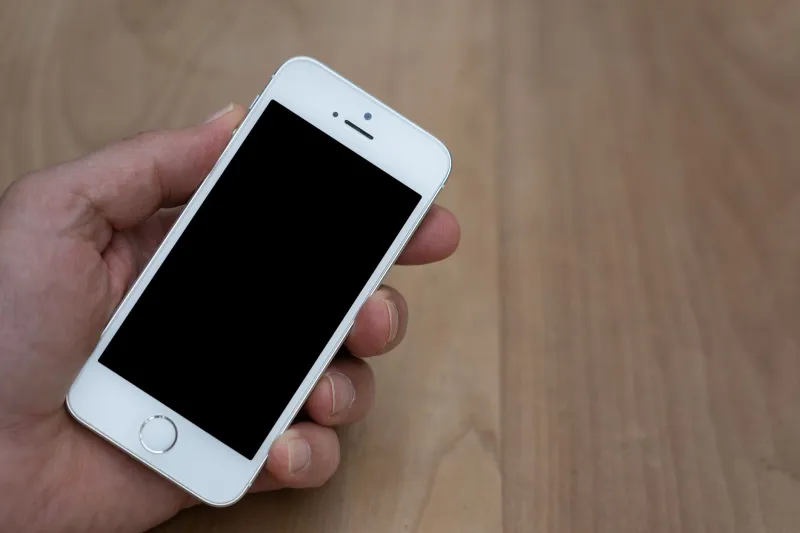
In the early years of capacitive touchscreen research, ergonomists and HCI scholars began mapping what would become one of the most cited—and most misapplied—concepts in mobile interface design: the thumb zone. The basic premise was straightforward. When a user holds a smartphone in one hand, the thumb traces a natural arc across the screen. Targets within that arc are easy to reach; targets outside it require repositioning the hand, shifting the grip, or recruiting the opposite limb. Researchers documented this geometry carefully, and designers adopted it enthusiastically.
The problem is not the research itself. The problem is what happened when that research was operationalized at scale.
The thumb zone, as described in the most widely cited studies, was derived predominantly from right-handed single-handed grip postures. That methodological starting point was rarely foregrounded in the design guidelines that followed. By the time major mobile operating systems and flagship applications began encoding 'reachability' as a core usability principle, the right-handed thumb had been quietly elevated from a common case to a universal one.
Motor Planning and the Proprioceptive Penalty
Understanding why this matters requires a brief detour into motor neuroscience. Motor planning—the cognitive process by which the brain prepares a limb for a specific movement—is not merely a function of muscle memory. It is deeply tied to proprioception: the body's internal sense of where its parts are in space and how much force they are exerting. Research in this domain, much of it conducted outside the HCI community but directly applicable to it, demonstrates that when users are forced to perform movements that conflict with their dominant motor schema, cognitive load increases measurably.
For left-handed users navigating a right-optimized interface, or for ambidextrous users who shift grip depending on context—standing on a subway, eating lunch, carrying a bag—the cost is not merely inconvenience. It is a persistent, low-grade tax on attention. Every awkward stretch to reach a navigation element placed in the upper-left corner for right-handed ergonomic convenience is a small withdrawal from the finite attentional budget that users bring to any mobile task.
HCI researchers have documented these compensatory behaviors with some precision. Users regrip. They shift the device toward their fingertips. They use the opposite hand as a stabilizer while extending the primary thumb beyond its comfortable range. They tap incorrectly and must correct. Each of these micro-adjustments is invisible in aggregate usability metrics but accumulates into a meaningfully degraded experience for a substantial portion of the user population.
The Handedness Data the Industry Ignores
Estimates of left-handedness in the general population hover around ten percent, a figure that has remained stable across decades of research. Ambidexterity, depending on how it is defined and measured, accounts for a further segment that is harder to quantify but likely significant. Applied to the scale of smartphone adoption in the United States alone—where active smartphone users number in the hundreds of millions—these percentages represent tens of millions of individuals whose primary interaction modality is, at best, an afterthought in the design process.
The industry's response to this reality has been largely cosmetic. Apple introduced a Reachability feature in 2014 that shifts the screen downward with a gesture, acknowledging the reach problem without solving it structurally. Some Android manufacturers have offered one-handed mode toggles buried in accessibility settings. These accommodations treat handedness as an edge case requiring special handling rather than as a dimension of human diversity that should inform the foundational architecture of the interface.
Researchers in the HCI community have repeatedly called for more nuanced approaches. Proposals have included adaptive interfaces that infer dominant hand from interaction patterns, dynamic repositioning of primary navigation elements, and grip-aware systems that use accelerometer and touch-pressure data to adjust affordance placement in real time. Most of these proposals remain in the literature.
Asymmetrical Muscle Memory and Its Long-Term Consequences
Perhaps the most underexamined dimension of this problem is longitudinal. Repeated interaction with a right-biased interface does not merely inconvenience left-handed and ambidextrous users in the moment. Over months and years of daily smartphone use, it may actively shape the motor habits of all users in ways that entrench the asymmetry rather than resolve it.
The concept of motor adaptation—the nervous system's tendency to recalibrate movement strategies in response to repeated environmental demands—suggests that users who habitually compensate for interface asymmetry will develop compensatory muscle memory. They will become, in a functional sense, more right-hand-dominant in their mobile interactions than their natural laterality would predict, not because the interface met them where they were, but because they accommodated an interface that was never designed with their biology in mind.
This is not a trivial outcome. It represents a case in which design decisions made by a small number of engineers and product managers, drawing on research that was never intended to be prescriptive, have propagated across the embodied experience of hundreds of millions of users. The HCI research community, which has documented the problem with considerable rigor, bears some responsibility for the gap between its findings and their implementation.
A Research Agenda That Must Move Upstream
The path forward is not simply to design better one-handed modes. It is to reexamine the assumptions that made right-hand dominance the invisible default in the first place. That means recruiting more diverse participant pools in foundational motor research, disaggregating usability data by handedness and grip posture, and treating laterality as a first-class variable in interface evaluation rather than a footnote.
It also means engaging more directly with the product development pipeline. Academic findings about thumb-zone geometry and motor planning have demonstrably influenced industry practice. The question is whether the HCI community can exert the same influence over the corrective research that the original thumb-zone studies exerted over the problem they inadvertently created. The evidence suggests it can. The will to do so, however, remains unevenly distributed.